Film reviews and more since 2009
Publication Date: 01-29-2026
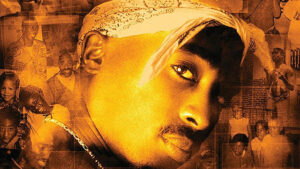
Tupac: Resurrection (2003) review
Dir. Lauren Lazin
By: Steve Pulaski
Rating: ★★★½
NOTE: This review was originally written in June 2014, but has since been edited and modified after rewatching Tupac: Resurrection this week.
Tupac: Resurrection is such a compelling documentary because rather than a documentarian and other talking heads detailing the motives and opinions of the late rap icon Tupac Shakur, old interview clippings, poetry snippets, and excerpts from Shakur’s music allow him to tell his own life story despite no longer being with us. It would’ve been much easier to hire a narrator or others to analyze Shakur’s upbringing, rise to fame, untold controversy, and his untimely death in 1996. Instead, Lauren Lazin and her team take a seemingly insurmountable task and, through outlining, editing, and an emphasis on chronology, make something seamless and compelling.
When Shakur died, he left us with a plethora of content, some of which had been released, some of which would resurface posthumously via his label Death Row Records. Tupac: Resurrection even contains some seldom-heard music from the man himself, and draws attention to Shakur’s handwritten poetry. A lot of his poems are about his mother, Afeni, who was a devoted Black Panther, and his father — whom he didn’t know until later in his life — also an African-American activist. Growing up in an unstable home, where violence was prominent and poverty ostensibly inescapable, Shakur would often emulate the behavior of characters on sitcoms like Diff’rent Strokes, which revolved around a big, happy family; something Shakur craved.
Shakur had the fortunate circumstance of being exposed to the arts and the theater when we was very young. He read and admired William Shakespeare throughout his entire life. His mother took him to plays. He would discuss plays, art, theater, or what-have-you with folks in his neighborhood who were far older than him. After leaving his mom’s house as a teenager, Shakur looked to role models on the streets, which helped build the complicated, often contradictory man we know today.
The film shows Tupac as a commanding, rugged philosopher, who would always emphasize the word “thug” and his personal motto “thug life.” However, the way he defined “thug” was much different than the contemporary dictionary definition of the world. Shakur states that a “thug,” in his mind, is a prideful underdog: somebody who has nothing but still holds their head up and works to make something. “What’s the difference between me saying, ‘I don’t give a fuck?’ and Patrick Henry saying, ‘Give me liberty or give me death?,’ Shakur asks.
Of course, the word “thug” was weaponized against Shakur and the Black community then as it is now. But Shakur opines that America, as a country, was built on the idea of “thug life.” The spirit is woven into the fabric of this country.

Directly after the scenes where Shakur is defining “thug” show Shakur working in efforts to bring the East Coast/West Coast sides of the rap game together in a social gathering that served as a truce in the nineties. Shakur stands tall on stage, rapping his heart out, before imploring the people at the gathering to stop the violence and he’ll continue to organize benefit concerts as a token for his appreciation.
When Shakur explains his music, however, is when he can be a deeply contradictory figure. Despite his music both equal parts powerful and empowering, Shakur’s actual music and his explanations and analysis of his music frequently seemed to come at a crossroads. This isn’t as big of an issue as it may seem. Shakur, despite being rugged, tough, and thuggish (the word is employed here with his definition in mind), he was also incredibly vulnerable, and his explanations of his work reflect his more sentimental or compassionate side. It’s easy to forget Shakur rose to prominence when he was in his late teens and remained larger-than-life and in the public eye until his mid-twenties. That’s what happens when greats die young. We often have to remind ourselves just how much they accomplished, and just how precocious they were before they exited their salad days.
Regardless, even Shakur’s perspective on certain issues makes one think more than the average rapper today. In one scene, Shakur tells us that the only reason the Vietnam War ended was because we saw the horror that took place over there; with other wars, we kind of just assumed people were dying in a civil, honorific way.

When the time comes for Shakur’s brief but significant career as an actor to be discussed, one can see that through his methods of preparation and focus when portraying another character that Shakur was nothing other than a method actor, or somebody that invests in and studies their character for an ample amount of time in order to perfect a role. From his memorably gritty performance as the main antagonist in the street-drama Juice to the sweeter, softer side of him shown in the film Poetic Justice, Shakur demonstrated a diverse, character-actor mentality despite being so young and impressionable in the industry.
Finally, Tupac: Resurrection looks at the controversy Shakur endured, not in the form of concerned politicians and talking heads in terms of what music their children were listening to, but how Shakur found himself wrapped up in several sexual assault cases, all of which he vehemently denied. With the aura Shakur had created about himself through his music and ideas, he proved that while you can be one of the smartest thinkers in a dangerous industry, you’re still part of a very dangerous industry, which only further proved true as Shakur was shot and killed in Las Vegas in September 1996 in a drive-by shooting.
Tupac: Resurrection is a fantastic display of documentary filmmaking by director Lazin, who allows Shakur to discuss ideas and topics “in his own words.” More than 20 years after its release and subsequent Oscar-nomination at the 77th Academy Awards, it remains one of the strongest, most introspective music documentaries I have yet to see.
My review of Biggie & Tupac
My review of All Eyez on Me (2017)
Directed by Lauren Lazin.

About Steve Pulaski
Steve Pulaski has been reviewing movies since 2009 for a barrage of different outlets. He graduated North Central College in 2018 and currently works as an on-air radio personality. He also hosts a weekly movie podcast called "Sleepless with Steve," dedicated to film and the film industry, on his YouTube channel. In addition to writing, he's a die-hard Chicago Bears fan and has two cats, appropriately named Siskel and Ebert!