
Film reviews and more since 2009
Publication Date: 07-05-2026
Kill Bill: The Whole Bloody Affair (2004) review
Dir. Quentin Tarantino

By: Steve Pulaski
Rating: ★★★½
NOTE: Kill Bill: The Whole Bloody Affair combines both Volume 1 and Volume 2 into a film that is four-and-a-half-hours long. It also features extended bits, most notably additional backstory regarding Lucy Liu’s O-Ren Ishii. In similar fashion, I’ve combined my reviews of both films and added a couple extra paragraphs pertaining to The Whole Bloody Affair.
Quentin Tarantino always conceived Kill Bill as one long movie, but knew the commercial viability of a four-and-a-half-hour martial arts was slim. He has consistently referred to his work as “one movie,” and finally, in 2004, his wish finally came true, when Kill Bill: The Whole Bloody Affair premiered out of competition at Cannes. Getting the masses to see it was another prerogative, however. Plans to release the film via a multi-city, road-show format in 2005 were scrapped. Exclusive screenings occurred at a handful of festivals, but the combined work wasn’t accessible for general audiences.

In 2025, the film finally saw both a limited theatrical release and a full-throated wide release, once Tarantino himself obtained the rights from the rat bastard Weinsteins. Tarantino has called The Whole Bloody Affair “the film he was born to make,” and it’s easy to see why. At four-and-a-half-hours long, this is a magnum opus of everything Tarantino loves about film: black humor, colorful supporting characters, spicy, lively dialog, stylized violence, martial arts, and severed limbs serving as the prelude to geysers of blood spraying everywhere.
Brimful with style, tailored with influence from everything this side of Grindhouse cinema to Bruce Lee marital arts movies, and whiplash-inducing in its amalgamation of aesthetically pleasing violence and anime homage, Kill Bill is Quentin Tarantino at his most confident. I don’t know how he likes his steak, but this catches him in rare form.
Sure, Tarantino showed incredible poise for a 29-year-old director making his debut with Reservoir Dogs, and of course not just anyone could’ve nor would’ve dared pull off a dizzying and investing drama quite like Pulp Fiction. But Kill Bill is a testament to someone who has found his groove and is fully aware of his talents and gifts to the world.

The film opens with the titular villain (played by David Carradine) in the middle of a vicious massacre at a bridal party, which caps off when he shoots “the Bride” (Uma Thurman, as she’s known throughout the entire film — censors in early scenes bleep her name) and leaves her for dead. She survives, however, and awakes years later from a coma. As soon as she overcomes the paralysis in her legs, she has a hit-list of individuals she wants to kill: Vernita Green (Vivica A. Fox), O-Ren Ishii (Lucy Liu), Elle Driver, Budd, and finally Bill. All of these are members of the Deadly Vipers Assassination Squad and are highly trained, cold-blooded contract killers. Dressed in a yellow jump-suit which is no doubt a head-nod to Bruce Lee in his final film, Game of Death, the Bride uses a combination of her slick martial artistry on top of her prowess with her own reflexes and the help of a katana or two as she spends this first volume tracking down Vernita, a single mother, and O-Ren Ishii, whose disturbing and traumatic backstory is detailed in an extended anime sequence.
Between killing Vernita and going after O-Ren, the Bride makes a pit-stop at Hattori Hanzo’s (Sonny Chiba) restaurant. Hattori is a retired swordsmen, who swears off killing, but is persuaded by the Bride’s mission into crafting his finest sword in many moons. “If in your journey you should encounter God,” he tells the Bride before handing her what would likely be his final creation, “God will be cut.” But before she can go toe-to-toe with O-Ren, she must face an onslaught of henchmen on top of Go Go Yubari (Chiaki Kuriyama), O-Ren’s heartless young bodyguard who is as sharp as any of Hattori’s swords.
Conceived as one long opus, Kill Bill: The Whole Bloody Affair has the added benefit of Tarantino being allowed the freedom to be meticulous in his pacing and exposition. A significant portion of the new footage address O-Ren Ishii’s origin story in gorgeous Anime.
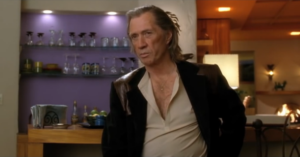
Tarantino works with cinematographer Robert Richardson, the masterful talent who has worked with everyone from Oliver Stone to Errol Morris, Martin Scorsese and Ben Affleck, in order to produce a tightly framed, gung-ho achievement for both men. The eye-popping primary colors and vicious displays of violence are as enticing as grimmer moments, including a particularly unsavory one that takes place in a hospital, where it’s revealed how the Bride was taken advantage of during her incapacitated state. She does get her revenge, in a manner that will make you wince despite the intriguing lack of bloodshed, but it’s a moment that might linger with you, as Tarantino, yet again, doesn’t shy away from the use of the C-word in addition to other details that make you infer the worst while hoping for the best.
Splitting the project into two films allowed Tarantino to give us what amounts to essentially two very different films: one defined by battle sequences, anime, and martial arts influence and a follow-up strengthened by dramatic revenge and methodical exposition, not to mention plenty of good stuff. With The Whole Bloody Affair, the final two hours (effectively Kill Bill: Volume 2) shows everything Tarantino grew up loving, still loves today, and has mastered himself. In many ways, he’s the Bride after she pays a visit to Pai Mei.
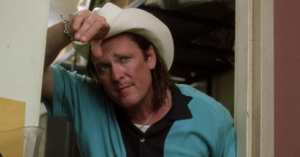
A good chunk of the film’s midsection revolves around Budd (Michael Madsen), Bill’s derelict brother who works as a bouncer at a strip-club and lives in a mobile home in the middle of the Texas desert. Bill reaches out to Budd after learning The Bride slaughtered the Crazy 88’s, including O-Ren Ishii and her blood-thirsty bodyguard Gogo (Chiaki Kuriyama), informing him that she is undoubtedly en route to exact revenge on him. Not if he can help it. To spoil the subsequent events would be unconscionable for me to do, but let’s just say, it’s intense, claustrophobic, and satisfying as all hell — as if to set the tone for the rest of the picture.
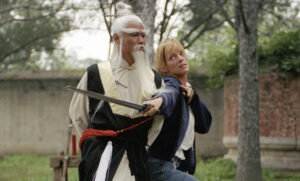
We, too, get a glimpse of where our protagonist received much of her training; from a ruthless, legendary warrior in the Asian high-tops. His name is Pai Mei, played outstandingly by Gordon Liu, and Bill takes the Bride to get schooled by him for what we assumed to be a considerable period of time. Bill offers her a tip about Pai Mei just before he leaves: “He hates Caucasians, despises Americans, and has nothing but contempt for women.” From her first encounter with the impeccably skilled swordsman, the Bride knows she’s not in the company of just any martial artist. Pai Mei is a remorseless, uncompromising teacher, who has no problem nearing breaking her arm nor serving her scraps if it means refining her skills to even meet his halfway.
The beauty of Tarantino is how he can house so many different conceits, set-pieces, and varying tones into one coherent film, and not since Pulp Fiction has that talent ever been quite demonstrated. Even the look and feel of this follow-up is significantly different than its predecessor. Where Volume 1 was predicated upon choreographed violence and enticing animated combat, Volume 2 visually mirrors a western with its washed out colors and undeniable Texas sleepiness. Warm colors contrast even the most harrowing moments of hand-to-hand combat, such as when The Bride goes toe-to-toe with Elle Driver (Daryl Hannah) in a cluttered camper that doesn’t have a hand in the fight yet gets pummeled in the process as if it’s also on the Bride’s hit-list.

It’s not until further reflection are you liable to realize how dense and deft the film really is. Here’s the rare motion picture that finds its footing as a revenge-tale, a martial arts picture, a Grindhouse homage, a lurid family drama, and in one particular instance, a horror movie. Many directors, I presume, would’ve tried to keep the project on one trajectory, yet it’s not unreasonable to suggest such a measure would’ve rendered a climax inferior to what Tarantino pummels us with: a 128 minute long romp that starts fast and never lets up. Even as the film is dominated by violence, tense altercations, and backstabbing foes, Tarantino never misses an opportunity to infuse his quirky, detail-oriented dialog that leads to some of the film’s most memorable sidebars (“calendar time” in the strip-joint, a lightly romantic conversation between the Bride and Michael Parks’ aging Mexican pimp, and Elle’s long-winded explanation of a Black Mamba snake).
Kill Bill: The Whole Bloody Affair is as impressive as anything Tarantino has done, and it’s a true pleasure to see the project released in its original, preferred form.
Starring: Uma Thurman, Lucy Liu, Sonny Chiba, Vivica A. Fox, David Carradine, Chiaki Kuriyama, Michael Madsen, Daryl Hannah, Gordon Liu, Perla Haney-Jardine, and Michael Parks. Directed by: Quentin Tarantino.

About Steve Pulaski
Steve Pulaski has been reviewing movies since 2009 for a barrage of different outlets. He graduated North Central College in 2018 and currently works as an on-air radio personality. He also hosts a weekly movie podcast called "Sleepless with Steve," dedicated to film and the film industry, on his YouTube channel. In addition to writing, he's a die-hard Chicago Bears fan and has two cats, appropriately named Siskel and Ebert!