Film reviews and more since 2009
Publication Date: 02-16-2026
Titicut Follies (1967) review
Dir. Frederick Wiseman
By: Steve Pulaski
Rating: ★★★★
 Remembering Frederick Wiseman
1930 – 2026
FOREWORD: Despite coming at the age of 96, and preceded by what could be called a colorful life, the death of Frederick Wiseman is an immense loss for the world of film. By any metric, Wiseman is the greatest documentary filmmaker in the history of the medium. His contributions to the world of cinema and a vast array of subjects — art, cuisine, culture, commerce, small-towns, diverse neighborhoods, institutions, and more — much like his character, cannot be overstated. Watching Wiseman’s films not only made me a better film critic, but a better person. Take a moment and explore his filmography on his website, Zipporah Films. May his memory be eternal.
In 1967, documentary filmmaker Frederick Wiseman made his first and most controversial film that uncovered the truth of what goes on behind the close doors of a seemingly typical mental asylum. The film is called Titicut Follies, and has proved itself to be one of the most controversial and enigmatic films of all time. It focuses on one of the touchiest subjects, and makes it so you can’t turn away even when you feel you should.
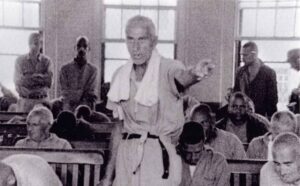
The only film ever banned in the United States for reasons other than obscenity, immorality, or national security, Titicut Follies documents life at the Bridgewater State Hospital for the criminally insane. It shows graphic depictions, in black and white, of the horror and wretched tainting of humanity and the dehumanizing of innocent people that took place at the institution. The patients in the asylum are taunted by guards, forced to walk around in the nude because “it is cheaper,” and are abused verbally and physically everywhere they turn.
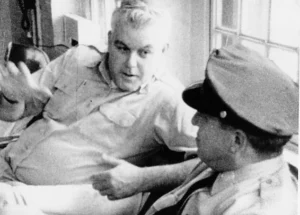
The most chilling aspect is when one man, dubbed “the paranoid schizophrenic,” claims that he feels worse now than when he checked into Bridgewater State. This leads to the shocking conclusion that maybe the asylum causes mental illness rather than prevents it. There is also a very haunting scene of force-feeding a reluctant patient whose food is then contaminated with cigarette ash from the person who is forcing the tube down his nose. The scene provided me with one of the most stunning and stiffening feelings I’ve ever seen in a film.
Shortly after it was completed, Wiseman was the target of the Massachusetts government who was threatening to ban the film completely from screenings and Television. The government stated that it was a violation of the patients’ lives and profit or publicity shouldn’t be made at their expense. Wiseman swears that the government was trying to protect a state run institution, and because of the graphic nature and honesty of the documentary the people simply didn’t want to give one of their facilities a bad name. I truly believe him. It seems like the typical move for a state government. Hide the truth, protect the wealthy.
Being that the film is so rare, how did I stumble upon a copy? Titicut Follies had one and only television airing; on PBS, in 1992. The film is now available on DVD, but was inaccessible for a considerable amount of time. My uncle of all people had a VHS copy of the one time it was broadcast on TV; he recorded the film because “it sounded interesting” per the TV Guide description, and was going out with friends that night and wouldn’t be home. A title card with strict, emotionless narration about the film’s content and an introduction by Charlie Rose preceded the film itself. After the film, a tongue-in-cheek statement about the asylum changing its ways was shown immediately followed by a PBS representative asking the viewer to call the number on screen to donate ten dollars to help the network invest in more documentaries.
So what was the film doing for 32 years? Wiseman continued to direct many other documentaries after Titicut Follies, where he focused on a variety of subject matters, at the same time try and give his first effort the rightful release it deserved. Finally, in 1991, he did after a Supreme Court ruled it acceptable since many of the patients filmed were deceased, their legal guardians at the time of the film were notified and each one confirmed to the use of the patient in the documentary, and as long as a statement was made that the institution was gradually different.
But is it? Currently, what happens behind those Bridgewater doors stays behind those Bridgewater doors. It’s an undiscovered mystery. I have a feeling it does possess some essence of normality in the present day. In the sixties, if you were criminally insane you were treated with carelessness. Over the years, I believe people have grew more accepting and tolerate of the unfortunate souls who have mental health struggles.
That’s not to say a sheet should be placed over past events. The treatment is nonetheless horrifying to this day, and Titicut Follies is for the people seeking the harsh truth. While it will be neglected by people that don’t believe they can handle the subject matter, it truly should be viewed by everyone. It’s already sad that the film has had such trouble getting some sort of broad release. This is the kind of film some people need to be forced to watch. Anyone in the medical field should be obligated, and any ordinary human should be aware at the very least.
Directed by: Frederick Wiseman.

About Steve Pulaski
Steve Pulaski has been reviewing movies since 2009 for a barrage of different outlets. He graduated North Central College in 2018 and currently works as an on-air radio personality. He also hosts a weekly movie podcast called "Sleepless with Steve," dedicated to film and the film industry, on his YouTube channel. In addition to writing, he's a die-hard Chicago Bears fan and has two cats, appropriately named Siskel and Ebert!