
Film reviews and more since 2009
Publication Date: 09-06-2026
Hot Dogs for Gauguin (1972) review
Dir. Martin Brest
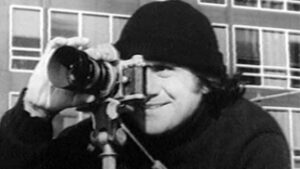
By: Steve Pulaski
Rating: ★★★
At the tail-end of my senior year of high school, I dove into the filmography of Martin Brest. Tracking down and watching films like Beverly Hills Cop, Going in Style (1979), and Midnight Run wasn’t difficult at all, but I was SOL in my search for somewhere to stream his debut short film, Hot Dogs for Gauguin. This was in 2014, and while sites like Mubi informed me of the existence of several foreign works and seldom-seen shorts, access to these works, while still above-average, wasn’t near where it was today.
Made by Brest during his time as an undergrad at NYU’s Film School in 1972, Hot Dogs for Gauguin was selected for preservation by the Library of Congress in 2009. In 2024, it entered the Museum of Modern Art, which is also when it found its way onto YouTube. Attending film school was a serious endeavor and commitment for upstart students during that era. While NYU film students were allowed access to 16mm cameras, editing equipment, and some lighting fixtures, their tuition costs did not pay for film stock, actors, locations, and props, the likes of which they’d have to outsource themselves. It’s why most student films of this era — and maybe today, you could argue — are talky, dramatic in nature, confined to maybe a couple of locations, and often derive their material from the lives of their young and ambitious creators.
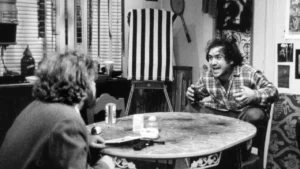
Brest enlisted in the help of his friends, including Rhea Pearlman, William Duff-Griffin, and a then-unknown Danny DeVito. In the 22-minute short, DeVito plays a starving photographer who know she’s one shot away from riches. He speaks of the Hindenburg disaster of 1937 to his pal (Duff-Griffin), and remarks about how the right photograph of a major tragedy would enrich him for life and etch his name and work into American, and perhaps global, lore. Named after the French painter, I suppose the title refers to that to starving creatives, hot dogs might as well be caviar.
So, DeVito devises a plan to blow-up the Statue of Liberty and capture the chaos on a readily mounted camera. Reminder: this was filmed in 1972, yet in the day-and-age of fleeting viral fame and videos and images that travel around the world faster than sanity and reason can put on their pants, Brest’s film is both pointed in its commentary for culture, the old newspaper adage of “if it bleeds, it leads,” and wry humor. DeVito shows an early knack for playing a belligerent, desperate cad, the kind that would make him one of the staples of television across multiple eras, be it in Taxi or, more contemporaneously, It’s Always Sunny in Philadelphia.
Meanwhile, come 1979, Brest would direct high-concept action-comedies that would help define the spirit of American cinema in the 1980s before segueing into the dramatic space in the 1990s with Scent of a Woman and Meet Joe Black. His career was cut far too short following one catastrophic (and unfairly maligned) bomb. However, the legacy of Hot Dogs for Gauguin can finally be enjoyed in its original form, thanks to its availability and the way it served as the initial building block for a director as significant to two decades of American film as any.
NOTE: As of this writing, Hot Dogs for Gauguin is available to watch on YouTube, free of charge.
REVIEWS OF OTHER MARTIN BREST FILMS:
My review of Going in Style (1979)
My review of Midnight Run
My review of Beverly Hills Cop
My review of Scent of a Woman
My review of Gigli
Starring: Danny DeVito, William Duff-Griffin, Rhea Pearlman, and Martin Brest. Directed by: Martin Brest.

About Steve Pulaski
Steve Pulaski has been reviewing movies since 2009 for a barrage of different outlets. He graduated North Central College in 2018 and currently works as an on-air radio personality. He also hosts a weekly movie podcast called "Sleepless with Steve," dedicated to film and the film industry, on his YouTube channel. In addition to writing, he's a die-hard Chicago Bears fan and has two cats, appropriately named Siskel and Ebert!